A baby’s room can go from cozy to stuffy in a matter of hours, and diaper odor is usually the main culprit. Keeping a nursery smelling fresh comes down to controlling smells at the source, building a few simple daily habits, and cleaning the right surfaces on a regular schedule. This guide walks through why nurseries start to smell, how to stop odor before it spreads, and which routines keep the room welcoming every day.
Why Do Nurseries Start to Smell in the First Place?
A nursery smells because odor sources sit in a small, often closed room with limited airflow. Dirty diapers, damp laundry, and spit-up cloths all release odor molecules that settle into soft surfaces. Once those smells build up, they linger long after the source is gone.
Managing odor at the disposal point is the most reliable first step. Brands like Diaper Genie make diaper pail refill bags that seal each diaper as you drop it in, which keeps odor from escaping between changes. That containment stops the smell from spreading through the room, so parents deal with far less lingering odor day to day.
What Causes Diaper Odor to Build Up?
Diaper odor builds up because bacteria break down waste and release gases like ammonia and sulfur compounds. The warmer and more humid the room, the faster this happens. A single diaper left in an open bin can scent an entire nursery within hours.
Frequency matters too. When a bin fills over several days, older diapers keep releasing odor while new ones pile on top. Emptying often and sealing each diaper slows that chain reaction.
How Does Poor Air Circulation Trap Smells?
Poor air circulation traps smells because stale air has nowhere to go. Odor molecules stay suspended and settle into curtains, rugs, and bedding instead of clearing out a window. A closed nursery acts like a sealed container that concentrates every scent.
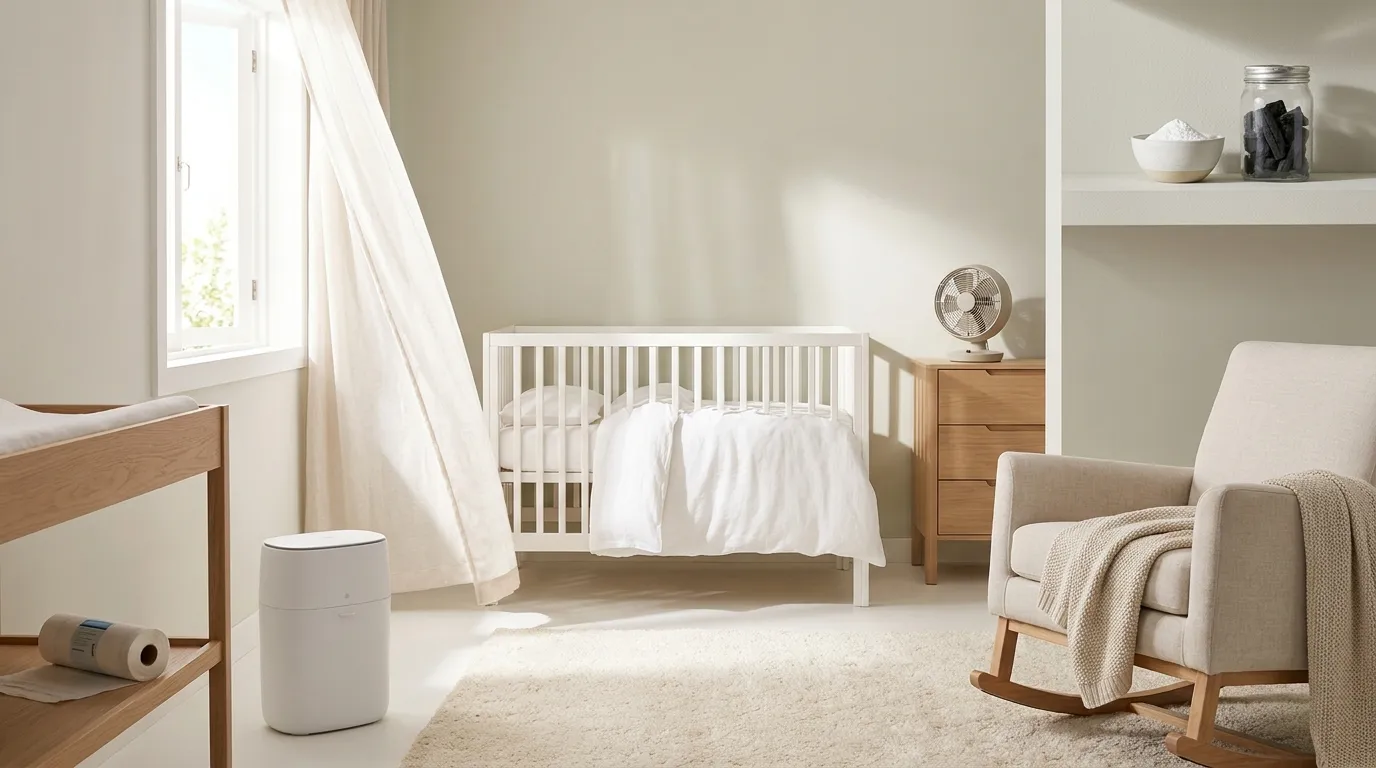
Moving air dilutes and removes those molecules. Even a slightly open window or a quiet fan gives odors an exit, which keeps them from soaking into fabrics.
How Can You Control Diaper Odor at the Source?
Controlling diaper odor at the source means stopping the smell before it reaches the air. The goal is to seal waste quickly and empty it on a schedule. This approach solves the problem at its origin rather than masking it later.
Why Does a Sealed Diaper Pail Make a Difference?
A sealed diaper pail makes a difference because it isolates each diaper behind a barrier. Instead of odor drifting out every time you open a lid, a good pail clamps or twists the bag shut around the waste. That seal is what separates a fresh nursery from a smelly one.
The seal also protects against humidity, which speeds up odor. By keeping air and moisture away from used diapers, a pail buys you time between emptyings.
How Often Should You Change Diaper Pail Refills?
You should advance or change a diaper pail refill whenever the liner fills up, which for a newborn often means every 2 to 3 days. Newborns can go through 10 or more diapers a day, so liners fill faster in the early months. Waiting too long lets trapped odor concentrate and escape the moment you open the pail.
A simple rule helps: refill or empty before the bin reaches the top, not after. Staying ahead of the fill line keeps the seal working the way it should.
What Daily Habits Keep a Nursery Smelling Clean?
Daily habits keep a nursery smelling clean by removing odor sources before they accumulate. Small, consistent actions beat occasional deep cleans. A few minutes each day prevents most smells from ever settling in.
How Can You Improve Airflow and Ventilation?
You can improve airflow by opening a window for a few minutes each morning and running a low fan during the day. Fresh air pushes out concentrated odors and lowers humidity at the same time. Even in cold months, a short daily airing makes a noticeable difference.
Positioning matters as well. Keeping the crib and changing area away from stagnant corners helps air move around the room instead of pooling in one spot.
Which Natural Deodorizers Are Safe Around Babies?
Baking soda and activated charcoal are two natural deodorizers that are safe around babies because they absorb odor without releasing fragrance. A small open container of either, placed out of reach, pulls smells from the air quietly. They work without the strong scents that can irritate a baby’s airways.
Avoid plug-in air fresheners and scented sprays near an infant. Unscented absorption is gentler and does the real work of removing odor rather than covering it.
How Do You Deep Clean a Nursery to Remove Lingering Odors?
You deep clean a nursery by targeting the soft materials and hidden surfaces that hold odor. Wiping visible areas is not enough when smells have soaked into fabric. A monthly reset clears the odors that daily habits miss.
What Surfaces and Fabrics Hold Onto Smells?
Carpets, curtains, upholstered chairs, and crib mattresses hold onto smells because their fibers trap odor molecules. These materials act like sponges, absorbing scent over weeks. They’re usually the reason a room still smells even after the diapers are gone.
Focus your cleaning there. Vacuuming fabric surfaces, wiping the changing pad, and airing the mattress removes the reservoirs where odor hides.
How Often Should You Wash Bedding and Soft Items?
You should wash crib sheets and soft items about once or twice a week, and more often after leaks or spit-up. Regular washing stops odor from settling permanently into the fibers. Fresh bedding also makes the whole room smell cleaner instantly.
Rotate a spare set so the crib is never bare during laundry. Keeping backups ready makes frequent washing easy to sustain.
Key Takeaways for a Fresh-Smelling Nursery
A fresh-smelling nursery comes from three habits working together: sealing odor at the source, moving air through the room, and cleaning the fabrics that trap scent. Start with a well-sealed pail and timely refills, then layer in daily airing and weekly washing. Together these steps keep a baby’s room welcoming without relying on heavy fragrances.
Frequently Asked Questions About Nursery Odor Control
How Do You Get Rid of Diaper Smell Fast?
Seal or remove the used diaper first, then open a window and run a fan to clear the air. Adding an open container of baking soda nearby absorbs what’s left. Most diaper smell fades within minutes once the source is sealed and air starts moving.
Are Air Fresheners Safe to Use in a Baby’s Room?
Sprays and plug-in fresheners are best avoided in a baby’s room because their fragrances can irritate sensitive airways. Unscented options like baking soda or activated charcoal are safer and remove odor instead of masking it. If you want any scent, keep it faint and well away from the crib.
How Often Should a Nursery Be Aired Out?
Airing a nursery once a day for a few minutes is enough to clear most built-up odor. A quick morning window opening works well, even in winter. On humid or high-traffic days, a second airing in the evening keeps the room fresh.