
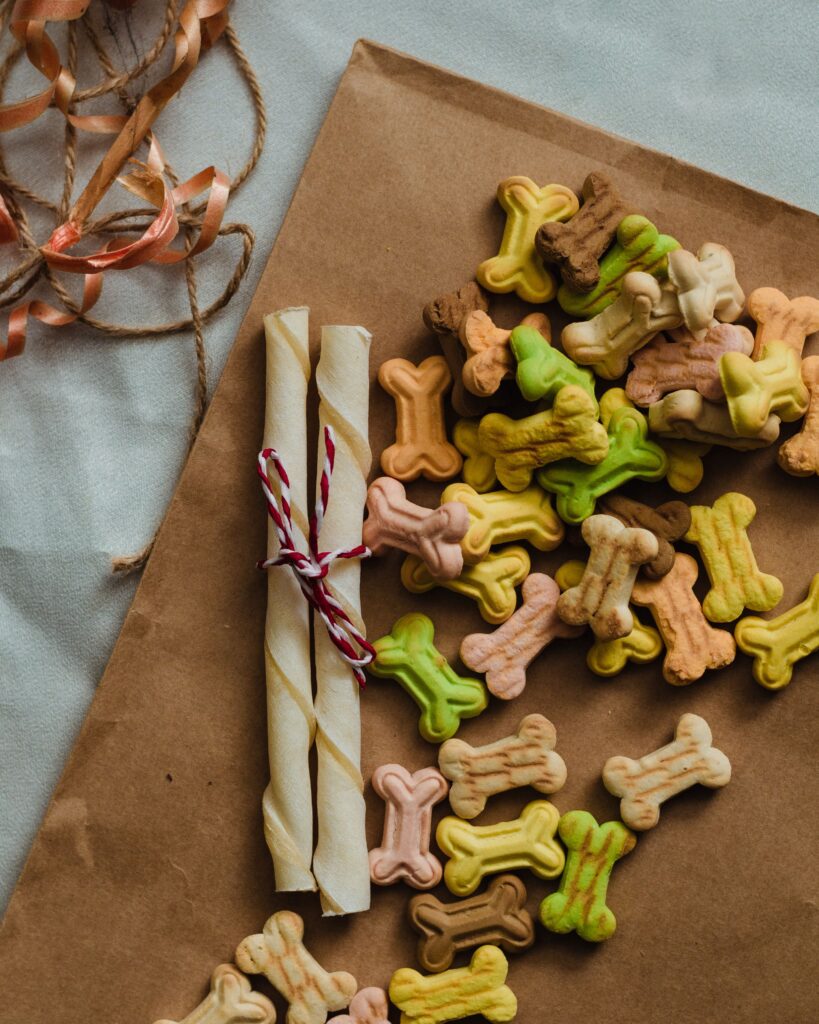
If you are the kind of dog mom who researches everything before buying it, you already know that the treat aisle is overwhelming. There are dozens of options, most of them dressed up in cheerful packaging with words like “wholesome” and “farm-raised” printed in reassuring fonts. But a cute bag does not tell you much about what is actually inside, and the truth is that a lot of popular dog treats are packed with ingredients that do very little for your dog’s health and sometimes actively work against it.
Asking the right questions before you buy is one of the simplest ways to make sure what you are giving your dog is actually worth giving. Here are six questions worth making a habit of.
1. Are the Ingredients Easy to Understand?
This is always the first stop. Flip the bag over and read the ingredient list before anything else. A short list with recognizable items is a good sign. A long list with chemical preservatives, artificial flavors, and ingredients that sound more like a lab report than food is worth putting back on the shelf.
Single-ingredient treats are the gold standard for simplicity. There is no ambiguity about what your dog is eating, no hidden fillers, and no guesswork about what might be causing a reaction if one shows up. The fewer ingredients, the more transparent the product.
2. Is It Fully Digestible?
This question does not get asked nearly enough, and it matters enormously. A treat that your dog cannot properly digest is not just nutritionally useless; it can be dangerous. Rawhide is the most well-known example of this, but it is far from the only offender. Products made from processed hides, synthetic binding agents, or compressed materials that do not break down in the digestive tract have caused blockages serious enough to require surgery.
When shopping for natural dog snacks, look specifically for options that are described as fully digestible and made from real food-grade ingredients rather than processed byproducts. This is actually the reason Bully Bunches was started, after a family dog nearly died from an indigestible chew. Their entire product line is built around the principle that a treat should be as safe passing through as it is enjoyable going in.
3. Does It Contain Rawhide or Chemical Additives?
Rawhide is cheap, widely available, and still very much on shelves despite being one of the more controversial dog chew products out there. It is made from the inner layer of animal hides and is heavily processed, often with chemical treatments, to achieve its familiar shape and texture. Dogs can chew off large chunks that swell in the stomach, and the digestibility issues that follow range from mild upset to life-threatening blockage.
Beyond rawhide, it is worth checking for artificial preservatives like BHA, BHT, and ethoxyquin, which appear in many processed treats and have raised enough concern among veterinary nutritionists to be worth avoiding when natural alternatives exist.
4. Is the Protein Source High Quality?
Not all protein in dog treats is equal. Some products use meat meal, byproducts, or unnamed protein sources that give you very little information about what your dog is actually consuming. High-quality treats will specify the protein source clearly, such as 100% beef, and ideally note that it comes from human-grade or grass-fed animals. That distinction matters because human-grade standards require a higher level of quality control than feed-grade, which is what most commercial pet food falls under.
According to the Association of American Feed Control Officials, the labeling standards for pet food allow for significantly more variation in ingredient quality than human food standards do, which is why reading beyond the front of the package is so important.
5. Does It Support More Than Just Cravings?
A good treat should do something useful. The best natural chews do double duty, satisfying your dog’s urge to gnaw while also contributing to dental health, delivering real protein, and providing the kind of sustained mental engagement that keeps dogs calm and occupied. The mechanical action of working through a firm, long-lasting chew helps remove plaque and tartar from the teeth in a way that soft treats simply cannot replicate.
In practice, pet moms who make the switch from soft, processed treats to natural chews often notice improvements in their dog’s breath, coat, and overall energy levels over time, without making any other changes to their routine.
6. Is the Size and Thickness Right for My Dog?
This one is easy to overlook when you are focused on ingredients, but it matters for safety and enjoyment. A chew that is too small for your dog’s size can become a choking hazard. One that is too large or too dense for a small breed can be frustrating and go untouched.
Most quality treat brands will specify the appropriate dog size on the packaging, and it is worth paying attention to that guidance rather than just grabbing whatever is in stock.
Conclusion
Buying dog treats does not have to be complicated, but it does require a little more attention than most of us give it by default. The questions above take less than two minutes to work through in the treat aisle, and they make a real difference in what ends up in your dog’s bowl. Think of it the same way you think about feeding your kids: you would not hand them something without at least glancing at what is in it, and your dog deserves that same basic consideration.
Once you get into the habit of asking these questions, it becomes second nature, and you stop reaching for whatever is on sale and start reaching for what actually makes sense.
