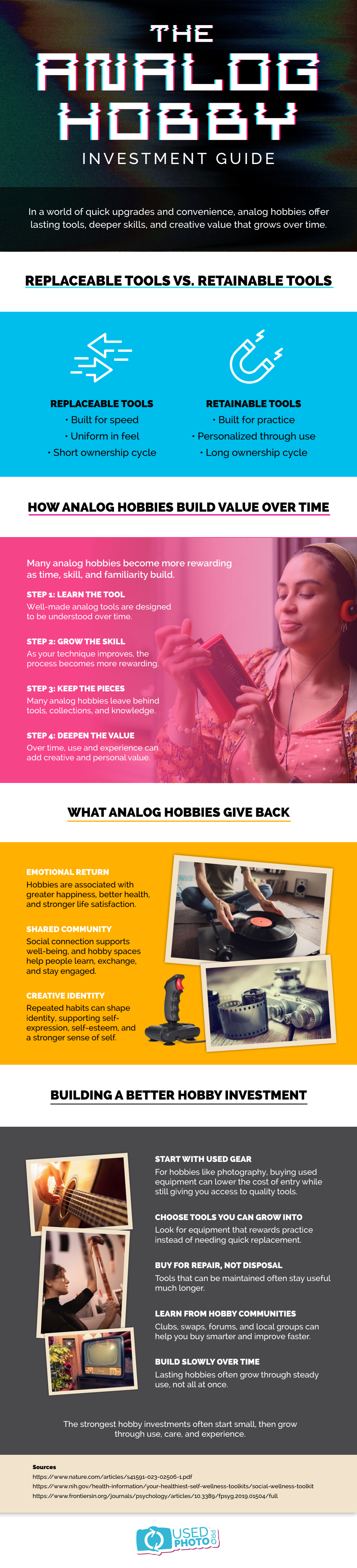

Screens fill much of modern family life, from work and school to entertainment and communication. That helps explain the appeal of hobbies built around physical tools and hands-on skills. Film photography, sewing, woodworking, pottery, gardening, and vinyl collecting all offer ways to spend time away from a device. Many also require an upfront investment. Before buying equipment, it helps to separate purchases that support a lasting hobby from expensive gear that may spend most of its life in a closet.
Start With the Activity, Not the Equipment
A common mistake is buying advanced equipment before knowing whether the hobby will stick. Someone interested in sewing, for example, may be better served by a basic machine and a few small projects before investing in specialized equipment.
The same applies to photography. Beginners interested in film can explore used Nikon cameras and other secondhand equipment rather than immediately purchasing collectible or professional-grade models. A functioning older camera can provide everything needed to learn exposure, composition, and film handling.
Renting or borrowing equipment is another option for expensive hobbies. A few weekends with a rented lens, pottery wheel, or camping setup can reveal whether the activity deserves a permanent place in the household budget.
Calculate the Cost of Participation
The purchase price is rarely the full cost of a hobby. Film photography requires film and processing. Gardening involves soil, plants, tools, and seasonal replacements. Woodworking may require lumber, blades, finishing products, and safety equipment.
Think about cost per use rather than price alone. A $300 tool used twice costs far more per session than a $600 tool used every weekend for several years.
Storage deserves consideration as well. Large hobby equipment can consume garage, basement, or closet space that a family needs for something else. That practical cost becomes more noticeable as equipment accumulates.
Know When Used Equipment Makes Sense
Secondhand purchases can reduce the cost of entering an established hobby, particularly for equipment built to last. Cameras, hand tools, musical instruments, and sewing machines can remain useful for decades if maintained properly.
Condition matters more than age alone. Before purchasing, check whether replacement parts and repair services remain available. Mechanical equipment should operate smoothly, while electronics need to be tested rather than assumed functional.
Resale value can also reduce the financial risk of experimenting. Popular equipment in good condition may retain enough value to recover part of the original purchase price if interests change.
Spend More Where Quality Changes the Experience
Buying the cheapest option is not always economical. Poor tools can make a new hobby unnecessarily frustrating or require quick replacement.
Higher spending makes the most sense when better equipment improves safety, durability, comfort, or the quality of the finished work. A reliable sewing machine that feeds fabric consistently has practical value. Paying substantially more for decorative features that do not affect performance may be harder to justify.
Skills should usually develop alongside equipment. If a hobbyist has not reached the limits of the current setup, another upgrade may accomplish less than additional practice.
The smartest analog hobby investments support something that gets used. Start with enough equipment to participate properly, learn what features actually matter, and upgrade only when experience provides a clear reason. Check out the infographic below for more information.