
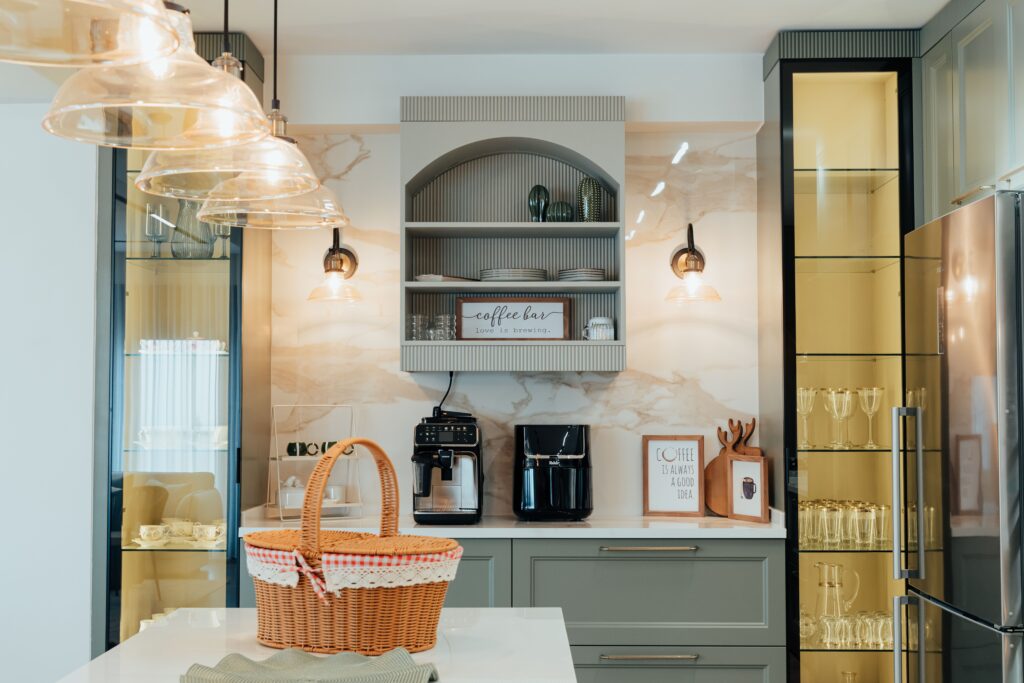
Morning has a way of exposing everything that was left undone the night before. The lunch box that never made it back to the counter. The breakfast bowl is still in the sink. The school form is hiding under a pile of posts. The coffee mug you cannot find until everyone is already asking for something.
A short kitchen reset before bed will not make family mornings perfect, but it can make them easier to manage. This is not a deep clean, and it should not become another exhausting job at the end of the day. Think of it as a small reset that clears the main trouble spots before the morning rush begins.
The focus is simple: breakfast, lunch boxes, water bottles, and a parent-friendly coffee corner. Done consistently, even ten quiet minutes in the kitchen can help the next day start with less clutter, fewer decisions, and a little more breathing room.
Why the Kitchen Shapes the Morning Mood
For many families, the kitchen is where the day really begins. It is where breakfast happens, lunches are packed, water bottles are filled, and everyone gathers before heading in different directions.
When that space is already cluttered, the morning starts with obstacles. You have to clear dishes before making toast, wipe sticky counters before packing lunch, or search for a clean bottle while someone is already asking for breakfast.
Those small delays may not seem like much on their own, but they add up quickly when time is tight. A messy counter can turn a simple task into a chain of smaller jobs, which is often what makes the morning feel more stressful than it needs to be.
A reset kitchen gives the day a cleaner starting point. The counters do not need to sparkle, and the room does not need to look staged. It just needs to be ready for the first few things your family does every morning.
A ready kitchen usually means:
- Clear countertops where breakfast or lunch prep happens
- A sink that is empty or mostly clear
- Dishes loaded, washed, or at least out of the way
- Breakfast basics easy to reach
- Coffee essentials gathered in one place
This is less about housework and more about removing friction. When you can grab what you need without moving yesterday’s mess first, the morning has a better chance of staying on track.
Clear the Counters You Actually Use
The easiest place to begin is the counter. Not every surface needs attention. Focus on the areas that matter most in the morning: where you make breakfast, where you pack lunches, where the coffee is made, and where the children tend to drop their things.
Move anything that does not belong there. Mail, school papers, chargers, snack plates, shopping bags, and random toys have a way of collecting in the kitchen by the end of the day. Put away what you can, then place anything that still needs attention in one small pile rather than letting it spread across the worktop.
Common countertop clutter includes:
- Breakfast dishes and snack plates
- School folders and forms
- Keys, phones, and charging cables
- Grocery bags or parcels
- Small appliances that are not needed the next morning
Once the surface is visible, give the main prep areas a quick wipe. Crumbs near the toaster, spills by the sink, and sticky patches around the breakfast area are the things that feel most annoying at 7 a.m.
This step does not have to take long. Even two or three focused minutes can make the kitchen feel more usable. The aim is not perfection. It is to make sure tomorrow’s breakfast is not competing with today’s leftovers.
Make Breakfast Easier Before Anyone Is Hungry
Breakfast becomes harder when everyone is tired, hungry, and short on patience. The simplest way to avoid that scramble is to make a few decisions the night before.
Choose two or three breakfasts your family reliably eats on busy mornings. There is no need to plan anything elaborate. Toast, cereal, yogurt, fruit, porridge, overnight oats, or smoothie ingredients can all work well if they are easy to reach and quick to serve.
A simple breakfast setup might include:
- Bowls and spoons placed near the cereal
- Washed fruit left in a visible bowl
- Bread near the toaster with spreads nearby
- Overnight oats portioned in the fridge
- Smoothie ingredients grouped together or prepped in freezer bags
The key is to make the easy option obvious. If the bread, peanut butter, and bananas are ready to go, breakfast is less likely to turn into a long discussion. If everything is hidden in different cupboards, the morning starts with searching and negotiating.
A dedicated fridge shelf can help too. Yogurt cups, cheese sticks, fruit, or anything that needs to be added to lunch boxes can live in the same area. Children who are old enough can help themselves, and parents have fewer things to remember.
Breakfast does not need to be impressive to work. On school mornings especially, predictable is often better than creative.
Give the Coffee Corner Its Own Space
Parents often need one small routine that belongs to them before the day becomes noisy. For many, that is coffee. The trick is making it simple enough that it does not become another thing to manage.
Keep mugs, filters, beans, a scoop, kettle, and your brewing tool in one compact area. A tray, shelf, or small section of counter can work well, especially if your kitchen tends to collect school papers and bags by morning.
If you make coffee at home, keeping your mugs, filters, beans, and coffee making systems for home in one tidy corner can make the first cup feel like part of the routine rather than another task on the list.
You can also prepare a few small things before bed. Fill the kettle or water reservoir. Set out a clean mug. Measure the coffee if that suits your routine. Clear away anything that does not belong near that corner, especially homework sheets, permission slips, and lunch box supplies.
The point is not to create a picture-perfect coffee station. It is to make the first cup feel easy. When you are not hunting for the scoop or moving dishes out of the way, you gain a quiet minute at the start of the day.
Keep Lunch Boxes and Bottles in One Zone
Lunch packing becomes much easier when everything lives together. Instead of opening three cupboards and two drawers, choose one shelf, bin, drawer, or section of counter for the supplies you reach for every morning.
Keep these items close together:
- Lunch boxes and insulated bags
- Reusable snack containers
- Water bottles and thermoses
- Napkins, utensils, and straws
- Small ice packs
The night-before reset is a good time to fill water bottles, wash containers, portion dry snacks, or place empty lunch boxes on the counter. If something needs to be added from the fridge in the morning, leave a note where you will see it.
Partial prep still counts. Some evenings you may pack almost everything. Other nights, you may only rinse bottles and set out containers. Both are useful because they reduce the number of decisions waiting for you in the morning.
A lunch zone also makes it easier for children to help. Younger children can place their bottle beside their bag. Older children can choose a snack or check whether their lunch box is ready. Small responsibilities feel easier when the system is visible.
Use a Checklist Instead of Repeating Yourself
A simple morning checklist can save parents from saying the same things over and over. It also gives children a clear path through the morning, which can make the routine feel less like a string of reminders.
For younger children, pictures often work better than words. Use simple drawings or printed images for breakfast, teeth, clothes, backpack, shoes, and water bottle. Place the list somewhere they can see it, such as the fridge, hallway, or bathroom mirror.
Older children may prefer a short written list. Keep it clear and realistic. Six items are usually enough.
- Get dressed
- Eat breakfast
- Brush teeth
- Pack bag
- Put on shoes
- Take water bottle
The checklist should support the morning, not turn it into a strict schedule. If children can check off tasks themselves, they gain a little independence, and parents get a small break from carrying every detail in their heads.
A laminated sheet or page slipped into a plastic sleeve works well with a dry-erase marker. At night, wipe it clean and it is ready for the next morning.
Make the Reset Short Enough to Repeat
The best kitchen reset is the one you can actually do on an ordinary evening. It should be short, familiar, and easy to begin even when you are tired.
Pair it with something already built into your night. You might do it after dinner, while the dishwasher runs, after packing away leftovers, or once the children have gone upstairs to get ready for bed. A routine is easier to keep when it is attached to something that already happens.
A ten-minute reset might look like this:
| Task | Time |
| Clear counters and wipe key surfaces | 3 minutes |
| Load or run the dishwasher | 2 minutes |
| Set out breakfast basics and prep coffee | 2 minutes |
| Gather lunch boxes, bottles, and snacks | 2 minutes |
| Check tomorrow’s schedule | 1 minute |
Some nights will take less time. Some will take more. Let good enough be the standard. A mostly clear counter is better than a cluttered one. A rinsed bottle is better than one found in a school bag at breakfast. Progress is what makes the next morning easier.
A Calmer Start to the Day
The night-before kitchen reset is not about having a spotless home. It is about giving the next morning a kinder starting point.
When the counter is clear, breakfast is simple, lunch supplies are together, and coffee is easy to make, the day feels less rushed before it even begins. You are not trying to solve every small problem at once. You have already taken care of a few of them.
Family mornings may never be completely calm, especially with children, school bags, breakfast preferences, and last-minute reminders in the mix. Still, they can feel more manageable. Ten quiet minutes in the kitchen at night can make the first hour of the next day feel a little less frantic, and for busy parents, that is often enough to change the whole mood.
